
 By Callum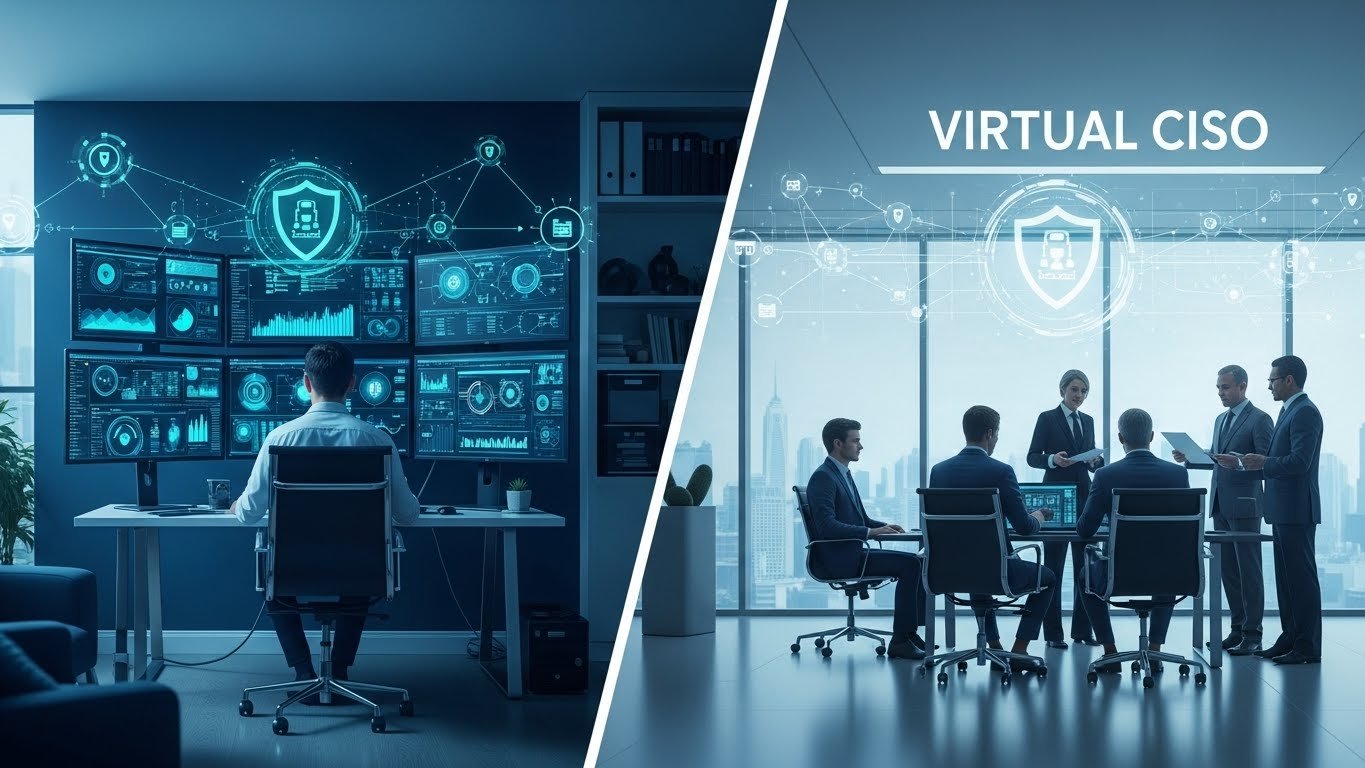
Cybersecurity leadership has become a necessity for modern organizations, but not every business has the resources—or the need—to hire a full-time Chief Information Security Officer (CISO). As cyber threats grow more sophisticated and compliance requirements expand, many companies are turning to a virtual CISO (vCISO) to fill this crucial gap.
A virtual CISO provides executive-level security guidance without the cost and commitment of an in-house, full-time leader. But how do you know whether a vCISO or traditional CISO is right for your organization? Let’s explore the differences, benefits, and key considerations.
What Is a Virtual CISO?
A virtual CISO is an outsourced cybersecurity expert who provides strategic oversight, risk management, policy development, and security leadership on a part-time or as-needed basis. Instead of hiring a single individual, organizations gain access to a broad range of security talent and expertise through a flexible service model.
For small and mid-size organizations that struggle to allocate budget for full-time executive roles, a vCISO offers a practical path to professional cybersecurity governance.
Virtual CISO vs. Full-Time CISO: Key Differences
1. Cost and Scalability
Hiring a full-time CISO can be expensive—often exceeding six figures in salary, plus benefits, tools, and training. A virtual CISO, on the other hand, provides comparable leadership at a fraction of the cost. Businesses can scale services up or down depending on their risk level, compliance needs, and internal capabilities.
2. Breadth of Expertise
Full-time CISOs bring deep, focused experience, but vCISO teams typically include multiple specialists. This means organizations benefit from a wider range of perspectives—from compliance experts to incident response analysts—without having to hire a large internal staff.
3. Flexibility and Availability
A virtual CISO model offers flexible engagement. Companies can bring in strategic security support during major transitions, audits, or incidents, and scale back when things are stable. This adaptability makes the vCISO approach appealing for businesses with fluctuating needs.
4. Cultural Integration
Full-time CISOs often become deeply embedded in the internal culture, which can be helpful for long-term planning. Virtual CISOs, however, excel at objective assessments because they are not influenced by internal politics or legacy processes.
Which Option Is Right for Your Organization?
Choosing between a vCISO and a full-time CISO depends on your organization’s size, industry, regulatory requirements, and risk tolerance.
A virtual CISO is often best for:
- Small to mid-size businesses lacking internal security leadership
- Organizations facing compliance demands but limited budgets
- Companies undergoing rapid growth or digital transformation
- Teams needing independent, unbiased security oversight
A full-time CISO may be ideal for:
- Large enterprises with complex infrastructures
- Organizations with extensive regulatory burdens
- Companies requiring round-the-clock, on-site decision-making
Final Thoughts
Cybersecurity leadership is no longer optional. Whether through a dedicated executive or a flexible vCISO service, organizations must establish clear governance to protect data, reduce vulnerabilities, and meet compliance requirements.
By understanding the differences between a virtual CISO and a full-time CISO, businesses can choose the model that best aligns with their strategic priorities and long-term security goals.