
 By Callum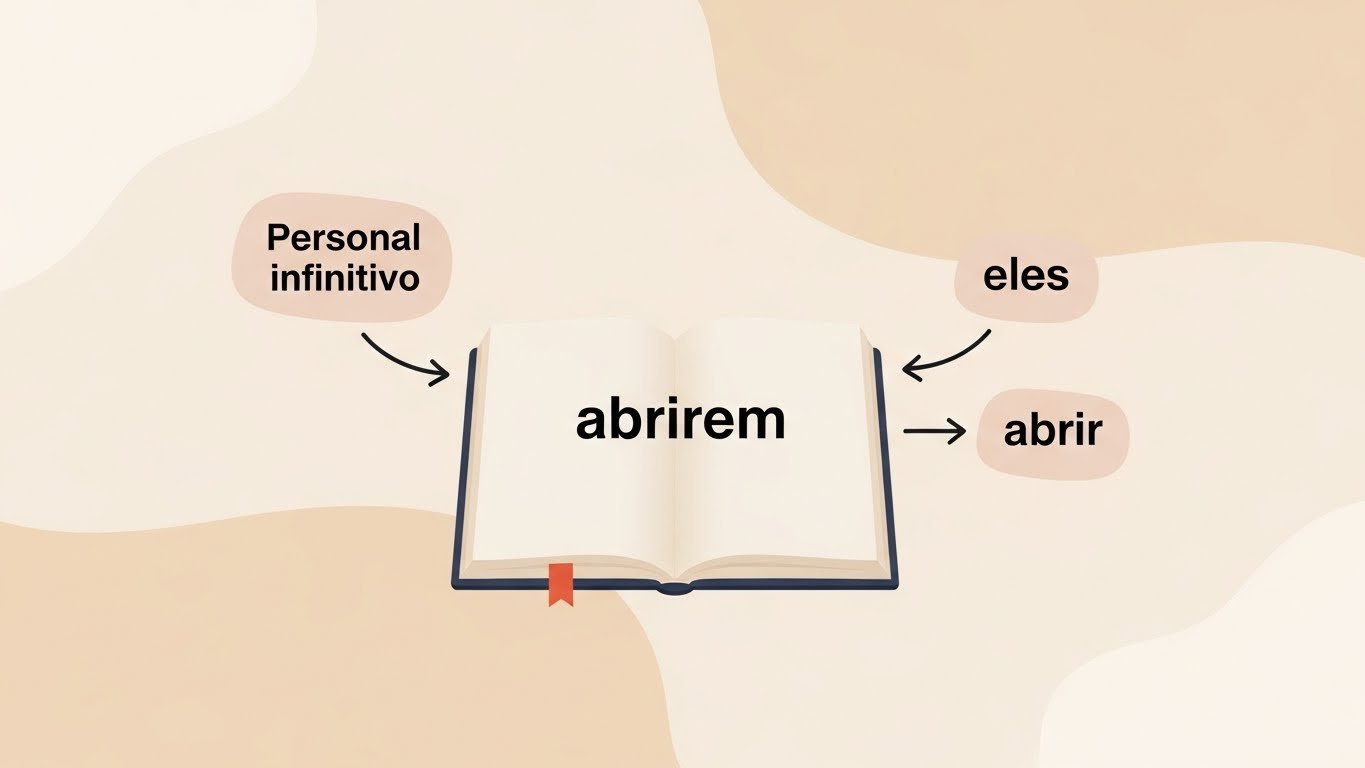
If you’ve ever tried to understand why the word abrirem exists, you’re not alone. Many English speakers studying Portuguese pause the first time they see it. It looks familiar, yet somehow not. It resembles the verb abrir, but the ending feels unusual, almost mysterious. That confusion is natural, especially because English does not have an equivalent grammatical form. The first instinct is to assume it’s a mistake, or perhaps a dialect variation. The truth is much simpler and far more interesting. Abrirem is perfectly correct, follows a clear rule, and plays an important role in the language. The real challenge comes from the fact that you don’t encounter it often at the beginner level. When you finally see it, you may feel unsure if you misunderstood something. Yet once you learn why it exists and how it works, the entire structure becomes intuitive. Early hesitation turns into confidence, and what once seemed odd transforms into a powerful linguistic tool. Understanding abrirem not only improves your grammar, but also deepens your appreciation of how uniquely expressive Portuguese can be.
What abrirem actually is in the structure of the language
To understand abrirem, you need to look at the verb abrir through the lens of Portuguese conjugation. The verb means “to open,” a simple and essential action. However, the form abrirem represents the personal infinitive. Portuguese is one of the few languages that uses this structure consistently. While English uses infinitives without changes, Portuguese adapts the infinitive to reflect a specific subject. That’s the key difference. The personal infinitive is not tied to tense; instead, it identifies who performs the action. This means abrirem corresponds to “they” performing the action of opening, but without attaching a specific time frame. The full set of personal infinitive forms of abrir looks like this: abrir, eu abrir, tu abrires, ele abrir, nós abrirmos, vós abrirdes, eles abrirem. When you see abrirem, you are seeing the third person plural. Once you understand that, the form stops feeling unusual and starts fitting naturally into the system. It belongs exactly where the grammar expects it to be.
You Might Also Like: Giniä
Why the personal infinitive matters more than you think
You may wonder why Portuguese even needs a personal infinitive. After all, many languages communicate perfectly well without it. The answer lies in precision and rhythm. The personal infinitive helps speakers express actions with clarity when a second verb depends on the subjects. Consider a structure that involves intention, permission, obligation, or a future possibility. These situations often call for two verbs in sequence. Without conjugating the second verb, you might create ambiguity. With the personal infinitive, you ensure everyone knows who performs the action. That subtle distinction gives Portuguese a flexible elegance. It allows sentences to flow with fewer pronouns while keeping the meaning exact. Abrirem is part of that system. It signals that “they” are the ones involved, without forcing the speaker to shift to another tense or structure. Once you start seeing how many sentences depend on this device, you begin to appreciate the nuance it adds to communication.
Everyday examples where abrirem appears naturally
Seeing abrirem in real phrases brings the concept to life. When learners encounter practical examples, the pattern becomes clearer. You might find sentences such as these in conversations, instructions, or formal guidelines:
The manager allowed them to abrirem the documents.
The teacher asked the students to abrirem their books.
It’s important for them to abrirem space for new perspectives.
In each case, the action is linked to a specific group. The subject is clearly plural. The sentence would still be technically understandable without the personal infinitive, but the clarity would diminish. With abrirem, the meaning becomes unmistakable. You immediately know who must act. These real-world examples reveal how useful the form can be once you become comfortable using it.
Why abrirem often sounds strange to new speakers
Many language learners comment that abrirem “sounds wrong” the first time they hear it. That reaction comes from familiarity, not correctness. Because English never modifies infinitives, the Portuguese system naturally feels foreign. In addition, the personal infinitive is not heavily emphasized in beginner courses. Early lessons focus on present, past, and future, along with the most common verb forms. Only after a student advances does the personal infinitive emerge. When it finally appears, it feels like an unexpected addition. Beyond that, many native speakers don’t use the personal infinitive consistently in casual conversation. Spoken Portuguese often simplifies structures. People shorten, merge, or skip forms that feel too formal for rapid dialogue. As a result, learners hear fewer examples of abrirem in daily conversation. When they finally encounter it in writing, the form stands out sharply. That momentary surprise creates an illusion of oddness. Once the learner grows used to it, the form stops feeling unusual.
How to recognize when abrirem is the correct choice
The best way to master abrirem is to learn when the personal infinitive is required or most natural. Before choosing this form, ask yourself whether the sentence contains a clearly defined plural subject. If the subject is unknown or irrelevant, the personal form becomes unnecessary. Next, look for a construction involving words like para, sem, por, até, ao, or verbs that influence intention, permission, or obligation. These structures often lead to the personal infinitive. Finally, check whether adding a fully conjugated verb would disrupt the flow of the sentence. The personal infinitive helps avoid awkward constructions. After applying these steps several times, the usage of abrirem becomes intuitive. You stop wondering whether it looks strange and instead reach for it naturally. The more you read authentic Portuguese, the more often you’ll see the pattern repeating.
Avoiding the most common mistakes with abrirem
Even experienced learners occasionally misuse the personal infinitive. The most frequent mistake occurs when the subject is not actually plural. Using abrirem without a clear subject contradicts the purpose of the form. Another common issue involves confusion between the personal infinitive and the subjunctive. Although they sometimes appear in similar positions, they serve different functions. The subjunctive communicates mood and uncertainty, while the personal infinitive focuses on the performer of the action. Mixing the two can lead to unclear or unnatural sentences. Some beginners also attempt to use abrirem where a fully conjugated verb belongs. The temptation arises when you want to shorten a sentence or avoid switching tenses. But the personal infinitive is not a replacement for standard conjugations. It operates only within specific constructions. Paying attention to these distinctions helps you use abrirem accurately and confidently.
How style and tone influence the use of abrirem
Language is never just about rules; it is also about style. Abrirem tends to appear more often in written Portuguese than in spoken language. When writers want to maintain clarity without adding extra pronouns, they rely on the personal infinitive. It offers a clean, elegant solution in formal documents, guidelines, essays, instructions, or reports. In casual conversation, speakers often default to simpler structures. They may even avoid the personal infinitive entirely. This does not make their speech incorrect, but it does reduce grammatical precision. A learner who understands abrirem gains the ability to adjust tone depending on context. You can choose a simpler phrasing when speaking informally, or adopt a refined construction when writing formally. Recognizing this stylistic flexibility enriches your communication and helps you switch smoothly between registers.
The cultural dimension behind understanding abrirem
Grammar may seem mechanical at first, but forms like abrirem carry cultural significance. Portuguese and its related languages have a long tradition of expressing subtle distinctions in meaning through verb forms. The personal infinitive reflects a nuance valued in academic, literary, and administrative writing. It shows an appreciation for clarity without unnecessary repetition. When you understand the role of the personal infinitive, you also appreciate how Portuguese balances simplicity with precision. This cultural insight deepens your connection to the language. You start noticing how writers craft sentences with intention. You recognize what makes Portuguese expressive in ways that English cannot match structurally. In this sense, learning abrirem becomes more than learning a rule. It becomes an entry point into seeing how the language thinks and breathes.
How to build confidence using abrirem in your own writing
Confidence grows with exposure and practice. Start by reading examples where abrirem appears. Then, try constructing your own sentences with similar patterns. Begin with short phrases:
They asked them to abrirem the door.
They expected the group to abrirem the files.
It was necessary for them to abrirem the windows.
Once these simpler models feel natural, expand into larger sentences. Add context, reasons, or consequences. The goal is not to memorize rules but to internalize patterns. Over time, you’ll find yourself reaching for abrirem automatically when the structure calls for it. Another helpful strategy is revising your writing. After drafting a paragraph, review any phrases containing a verb followed by an infinitive. Check whether a personal infinitive would make the sentence clearer. This habit strengthens your intuitive ability to choose the best form.
Comparing abrirem with similar structures in Portuguese
It’s useful to compare abrirem with other forms that seem close in meaning. The infinitive abrir, without a subject, often appears in general instructions or recommendations. When the subject is important, abrirem becomes the stronger choice. The subjunctive appears when the sentence expresses emotion, doubt, obligation, or possibility. For instance, “que eles abram” belongs to a different grammar category. While both structures concern the same action, they communicate different aspects. The future subjunctive also plays a role in certain situations, but it signals a condition linked to a future event. Abrirem, by contrast, keeps focus on the performer without connecting to a timeline. Recognizing these distinctions improves your command of Portuguese and helps you choose forms deliberately rather than by guesswork.
When abrirem enhances clarity more than alternative phrasing
While Portuguese offers multiple ways to express an idea, abrirem often results in cleaner phrasing. For example, instead of using a relative clause like “that they open,” a personal infinitive reduces repetition and tightens the structure. Native speakers value this efficiency in formal settings. When you write academic papers, professional emails, or structured instructions, using abrirem at the right moment makes your language sound polished. Even in storytelling, it can help maintain a smooth flow. Each time you choose the personal infinitive, you reinforce the relationship between the subject and the action without dragging the sentence into unnecessary complexity. The more you recognize these stylistic advantages, the more naturally abrirem becomes part of your linguistic toolkit.
Understanding the rhythm and sound of phrases with abrirem
Portuguese has musicality, and the personal infinitive contributes to it. Sentences containing abrirem often sound balanced. The rhythm flows because the form fits neatly into the structure without heavy pauses or extra pronouns. When speaking aloud, you may notice that the phrase feels smoother than a longer alternative. This creates a pleasant cadence that native speakers appreciate. Rhythm may not be a primary reason for choosing a verb form, but it influences how comfortable the language feels. When you use abrirem correctly, you align your speech with the natural patterns of Portuguese. That harmony strengthens your fluency and helps you communicate with confidence.
Using It in professional and academic environments
Professional writing demands clarity and precision, and abrirem supports both. Reports, proposals, and formal communications often contain multiple actions linked by expectations or obligations. The personal infinitive helps express these ideas cleanly. If you work with Portuguese-speaking colleagues or clients, choosing abrirem can signal competence. It shows that you understand subtleties beyond the basic verb forms. In academic writing, the form appears even more frequently. Research papers, essays, and analyses rely on complex sentence structures. Abrirem becomes a tool for maintaining coherence. If you aim to use Portuguese in professional or scholarly contexts, mastering this structure is essential.
You Might Also Like: xnxubd VPN Browser APK
Psychological boost of mastering advanced forms like It
Language learners sometimes overlook the motivational value of mastering smaller details like abrirem. Each time you decode a structure that once confused you, your confidence grows. You feel empowered, capable, and ready to tackle even more challenging elements. Mastering abrirem provides that boost. It signals that you are no longer confined to beginner or intermediate expressions. It also opens the door to understanding more advanced texts. The form appears in literature, formal articles, and public documents. Once you see it and understand it instantly, you know your skills have reached a rewarding level. This small but meaningful victory encourages you to explore deeper layers of the language.
How consistent practice turns abrirem into second nature
The path to internalizing abrirem is steady and simple: exposure, repetition, and practical use. The more you encounter the form in real sentences, the more familiar it becomes. Try writing a few sentences every week using the personal infinitive. Read authentic Portuguese materials and highlight any examples. Look for patterns that tell you why the writer chose that form. Over time, your mind begins to predict where abrirem belongs before you even think consciously about it. That moment marks a turning point in your fluency. When a once-strange form becomes completely natural, you know you’ve absorbed a deeper level of the language.
Final encouragement for anyone still uncertain about It
If the word abrirem still feels unusual to you, remember that every learner goes through this stage. What once seems complex soon becomes simple with practice and exposure. You don’t need to force the form immediately. Instead, let your understanding grow gradually. With time, you’ll not only recognize abrirem effortlessly, but also use it confidently in your own sentences. Mastering this form reflects more than grammatical accuracy; it reflects genuine progress in your connection to Portuguese. Keep exploring, keep practicing, and enjoy the satisfaction that comes with unlocking every new layer of the language.