
 By Callum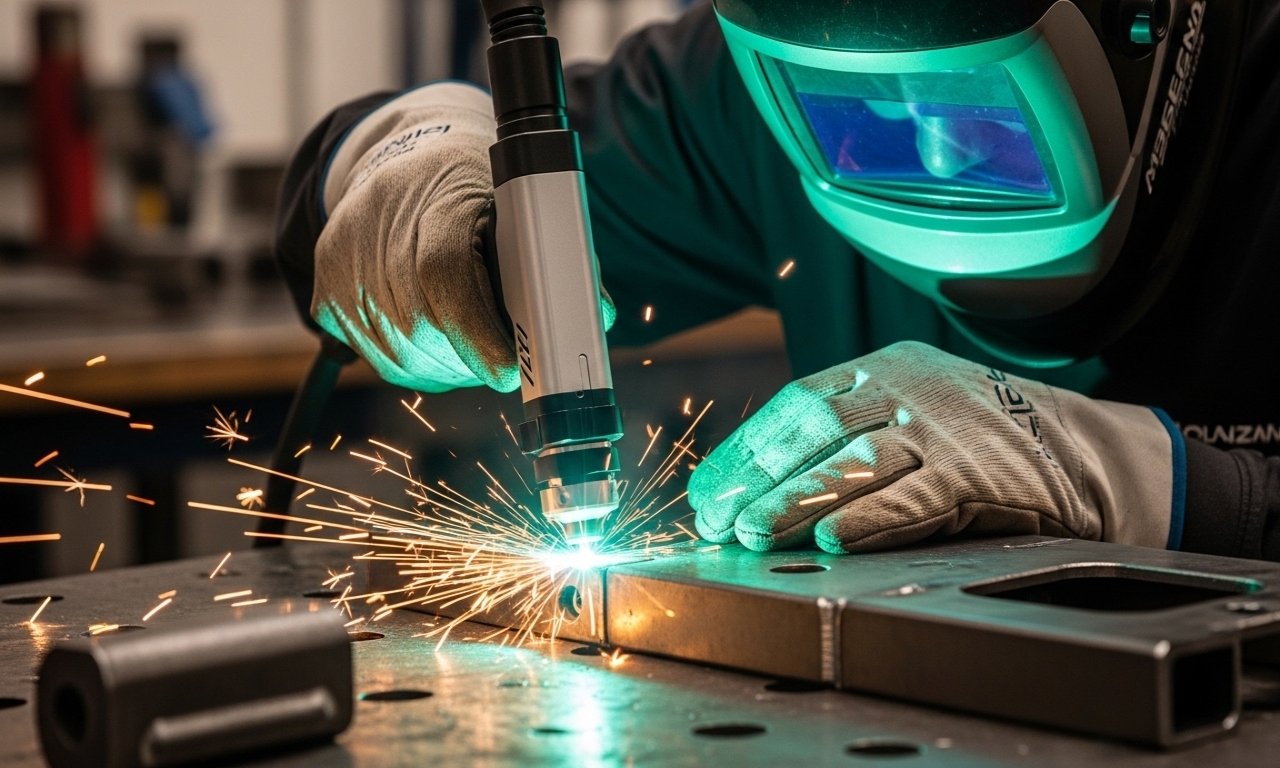
When work piles up, you usually face the same three problems: setup and finishing time stretch every job, weld appearance can vary from one operator to the next, and adopting a new process brings safety and documentation concerns you cannot ignore. You want steadier throughput and cleaner seams without adding more rework. That is why many shops are seriously evaluating a hand held laser welder as a modern, repeatable option.
A Current Product Example
Air-cooled systems have made handheld laser welding easier to deploy by eliminating the need to manage an external chiller. Denaliweld’s air-cooled JET 2000 is listed as a 2000 W portable unit with an operating range of -10°C to 40°C, a 100% duty cycle for continuous operation, and three-in-one welding and cleaning modes.
Market Shift Toward Portable Tools
Portability and Compact Footprints
Portable laser welders let you bring the process to the work cell instead of moving assemblies across the shop. Less handling often means fewer queues. For many part families, a hand held laser welder can reduce the walk time between fit-up, welding, and finishing.
Multi-Function from One Head
Many handheld systems bundle welding with cleaning or seam-cleaning modes. That matters if your real-time sink is prep and post-weld cleanup. Fewer tool changes can also make training easier by allowing operators to follow a consistent sequence.
Throughput and Workflow Benefits
Continuous Operation and Pacing
Shops care about pacing, not just peak speed. A stable process helps you schedule labor and keep work moving without stop-start surprises. With the right part selection, handheld laser setups can support longer runs and steadier output.
Faster Setup for Repeat Jobs
Because laser welding concentrates heat into a small zone, it can reduce distortion in many joints and reduce the amount of straightening required after welding. TWI notes that laser welding’s lower heat input supports minimal thermal distortion compared with many conventional processes.
Wire Feeding and Gap Handling
Fit-up is rarely perfect. Integrated wire feeding can help you bridge small gaps and control bead build so you maintain a consistent profile without excessive grinding. This is one place where a hand held laser welder can save time that normally disappears into “just a little more cleanup.”
| Time Driver | Common Bottleneck | What Often Improves |
| Setup | Dialing in and restarting | More repeatable settings |
| Distortion | Clamps and straightening | Lower pull on many joints |
| Finishing | Grinding and cleanup | Cleaner seams on suitable joints |
Weld Quality, Consistency, and Control
Stable Output and Delivery
Consistency is not only about appearance. Predictable welds speed up inspection and reduce rework. Many handheld systems allow controlled patterns that help standardize bead shape across shifts.
On-Tool Indicators and Feedback
Status indicators, alarms, and interlocks give operators real-time feedback at the head. Training still matters, but practical feedback can reduce avoidable mistakes and help you scale the process across more people.
Tracking and Monitoring
Logging time, power, and travel speed helps you connect settings to outcomes. That supports faster training and clearer troubleshooting.
Safety and Standards for Adoption
Built-In Protections for People
Handheld laser welding introduces hazards that require disciplined controls. The American Welding Society warns that direct or reflected high-power laser beams can be hazardous to view under any condition and recommends a documented laser safety program and a qualified Laser Safety Officer for Class 3B and Class 4 lasers. A starting reference is the AWS handheld laser welding safety fact sheet.
Standards and Documentation Signals
For documentation, OSHA points to the ANSI Z136 series as voluntary consensus standards for laser safety, and the Laser Institute of America describes ANSI Z136.1 as a foundation for workplace laser safety programs. You can read more on OSHA’s laser hazards standards page and the Laser Institute of America’s laser safety standards page.
What You Should Evaluate First
Before you adopt handheld laser welding, confirm you can define a controlled laser area without blocking material flow, train and authorize every operator, and document maintenance checks so the system stays predictable.
Practical Implementation Factors
Cooling and Operating Range
Cooling affects complexity and uptime. Air-cooled units reduce infrastructure, but you still need performance that matches your environment. The JET 2000 product specifications list an operating range of -10°C to 40°C, providing clear limits to compare with your shop conditions.
Space, Reach, and Handling
Plan cable routing, safe parking for the head, and a routine for lens checks and cleaning. Test your most common joint positions early. If operators cannot comfortably hold the angle and distance, quality will drift.
Service, Support, and Lifecycle
Portable equipment is moved frequently, so serviceability is critical. Denaliweld lists the JET 2000 at 90 pounds and describes a modular structure intended to simplify maintenance. Easier access can reduce downtime during routine service during production weeks.
Conclusion
Handheld laser welding is gaining traction because it can reduce setup and finishing time, improve repeatability, and support stronger process documentation when implemented with the right safety controls. Start with one repeatable part family, track rework and finishing time, and expand only when the numbers prove the benefit. If you want a published spec sheet to benchmark against, Denaliweld is one option to compare, including whether a hand held laser welder fits your workflow.