
 By Callum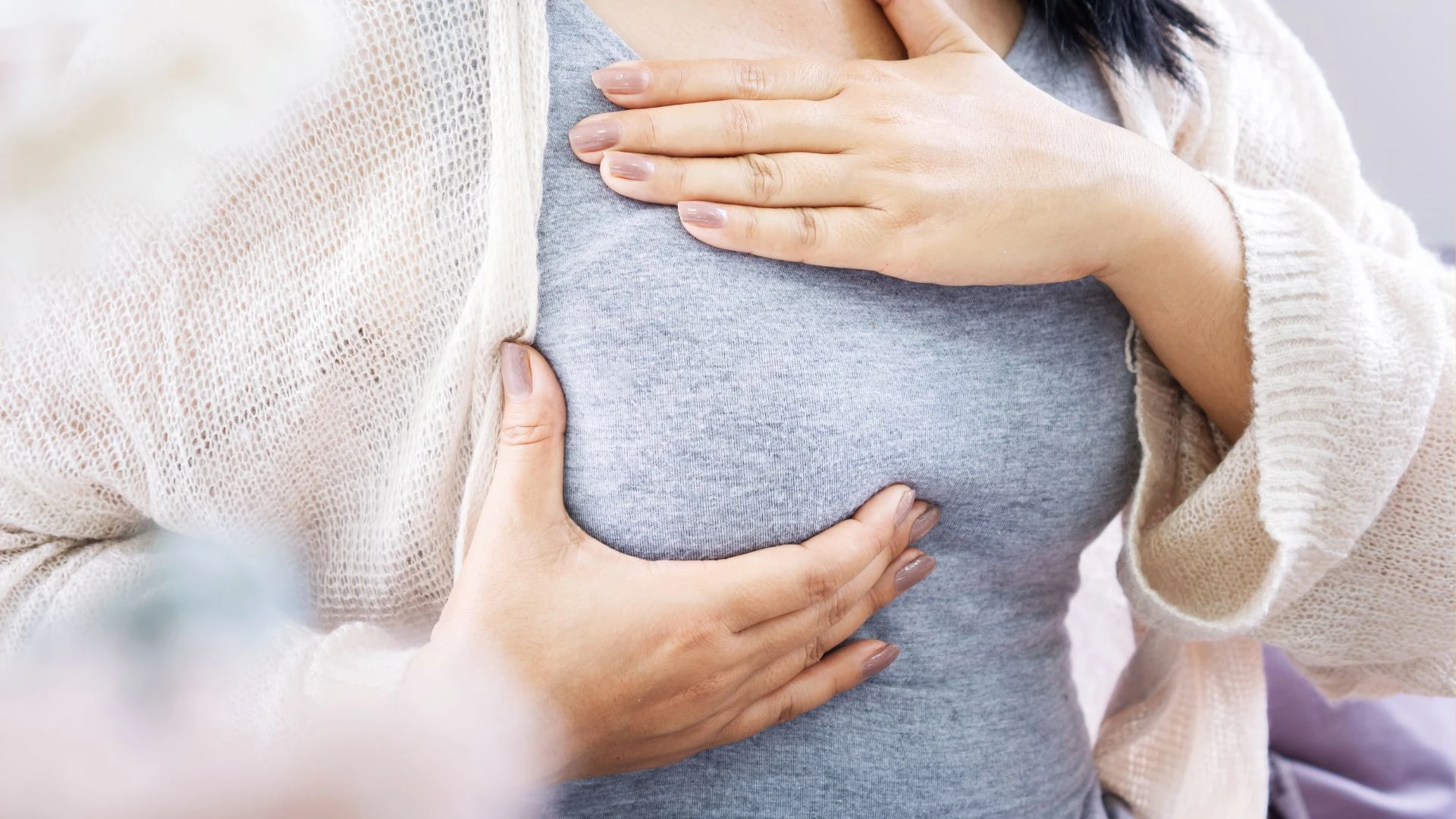
The monthly release of an egg ready for fertilization from the ovary can be accompanied by a variety of symptoms, including unpleasant ones. Many women notice that their breasts hurt around ovulation. Below we discuss what this may be related to and what doctors say about it.
Every month, a woman’s body undergoes sequential changes to prepare for possible conception. The maturation of the egg takes place in the ovaries, inside “sacs” called follicles. At a certain point in the menstrual cycle, the follicle reaches a size of about 18–22 mm, its wall ruptures, and the egg is released into the fallopian tube. At the site of the ruptured follicle, a corpus luteum forms, which produces hormones and thickens the uterine lining in preparation for a potential pregnancy.
If fertilization does not occur, the corpus luteum gradually regresses and is replaced by scar tissue, which ultimately leads to menstruation. The following month, the process repeats itself. Each stage is associated with certain signs and symptoms, both subtle and obvious. Pain is one of the most noticeable. Many women, for example, observe that their breasts are sore during ovulation.
Key Facts About Breast Changes During Ovulation
Breast sensations during ovulation are directly related to changes in the concentration of specific hormones. The transformations in breast tissue follow a certain rhythm — they tend to occur once a month, roughly in the middle of the cycle. The intensity and nature of these sensations are individual; different women experience them differently.
How the Breasts May Change During Ovulation
According to researchers from the Sechenov First Moscow State Medical University, breast pain is a fairly common complaint. It can be either cyclical or non-cyclical. Cyclical pain is associated with hormonal changes during the menstrual cycle. Mild discomfort in the breasts may occur at various stages of the cycle, for example, right before menstruation, and in many cases this is considered a normal variant. Typically, the discomfort subsides once bleeding begins.
During ovulation, which is also driven by hormonal shifts, pain in the breasts can occur as well. The cause of this cyclical discomfort is thickening and swelling of glandular tissue, ductal structures, and stroma, and/or stimulation of ductal secretion. All of this is the result of hormones — primarily estrogens, progesterone, and prolactin.
Cyclical breast pain around ovulation may also appear in response to taking hormonal medications, including oral contraceptives.
Why the Breasts Hurt
The mammary glands are highly sensitive to fluctuations in the hormonal milieu. This sensitivity is reflected in pain and discomfort. Breast tissue contains many hormone-sensitive receptors, so changes in estrogen and progesterone levels can be felt quite vividly. Unpleasant sensations may develop a few days before ovulation or during it, when estrogen and luteinizing hormone (LH) levels rise in the blood.
The lower the individual pain threshold and the higher the excitability of the central nervous system, the more intense the breast pain tends to be. Brazilian researchers have demonstrated experimentally that pain and sensitivity thresholds change depending on the phase of the menstrual cycle, regardless of whether a woman is taking oral contraceptives.
Is Breast Pain During Ovulation Always Present?
Not necessarily. Each woman has her own pain threshold and level of sensitivity, so sensations can vary. Some women experience breast tenderness all the way until menstruation begins. It is also important to remember that cycle length and the exact timing of ovulation differ from woman to woman. With early or late ovulation, a woman may confuse breast pain associated with ovulation and preparation for conception with breast discomfort more typical of the premenstrual phase.
Breast discomfort can also be caused by reasons unrelated to ovulation. According to data presented in the book Mastalgia, about two-thirds of women of reproductive age suffer from mastalgia — a condition characterized by dull, aching breast pain. Women often describe it as heaviness, tightness, discomfort, or burning, most commonly localized in the upper outer quadrant of the breast. Because of this, any atypical or worrying symptoms should be discussed with a specialist.
Why Breast Pain During Ovulation Occurs
Most often this is associated with mid-cycle hormonal changes and increased blood flow to the mammary glands. Hormonal shifts are essential for ovulation and potential conception, but they do not occur in isolation. The entire body reacts, including other organs and systems.
The breasts are among the first to respond to hormone fluctuations, because in the case of successful conception, an internal restructuring of the mammary glands begins to prepare them for breastfeeding. At the same time, pain may also be a sign of pathology: mastitis, benign or malignant tumors, trauma, or damage to the skin and subcutaneous tissue.
If breast pain occurs every month in the middle of the cycle, with the same intensity and in both breasts, it is highly likely to be related to ovulation and is usually considered physiologic. However, if discomfort appears at different times in the cycle, varies in intensity, is present only in one breast, or is accompanied by other worrying signs, medical evaluation is necessary.
How Long Does Breast Pain During Ovulation Last?
In a typical cycle, ovulation occurs between day 11 and day 16. Breast pain and discomfort may appear during this period or a few days beforehand. Usually, it does not last longer than about three days, but this is not universal. In some women, the unpleasant sensations may persist for two to three days after ovulation has ended.
Why Both the Breasts and Lower Abdomen May Hurt
If a woman feels breast pain around ovulation accompanied by cramping or pulling sensations in the lower abdomen, this may be a sign of early implantation and successful conception. Attachment of the embryo to the uterine lining (endometrium) is a delicate and critical moment for the future pregnancy. Its success depends on many factors, including a temporary reduction in the mother’s immune response to prevent rejection of the embryo.
During implantation, women often feel pulling or cramping pain in the lower abdomen. These sensations may be accompanied by light spotting — discharge that is red, pink, brown, or yellow. This is usually a normal variant in women who are trying to conceive, as long as there are no additional alarming symptoms. Implantation bleeding and pulling sensations generally resolve within about 48 hours. If pain intensifies, bleeding becomes heavier, or clots appear, urgent medical evaluation is warranted.
Swelling and Enlargement
Breast enlargement and a feeling of fullness during ovulation are normal phenomena. The expansion of glandular tissue is driven by hormones. Once hormone levels stabilize, the breasts typically return to their usual size.
Increased Sensitivity
Increased sensitivity of the breasts and nipples is another common sign of ovulation. During this period, some women avoid sexual activity because even gentle touch can be painful. Others find that lace underwear or rough fabrics cause significant discomfort due to friction.
Pulling Sensations
A pulling or dragging feeling in the breasts during ovulation is also associated with hormonal shifts and glandular swelling. Discomfort can often be minimized with supportive, well-fitted bras, especially in women with larger breasts.
How a Saliva-Based OVUL Ovulation Test Can Help Interpret Breast Symptoms
Many women try to “guess” ovulation based on breast tenderness, cervical mucus, or mild pelvic pain. However, these signs are subjective and can be influenced by stress, medications, sleep, and even diet. This is where objective ovulation tracking becomes important.
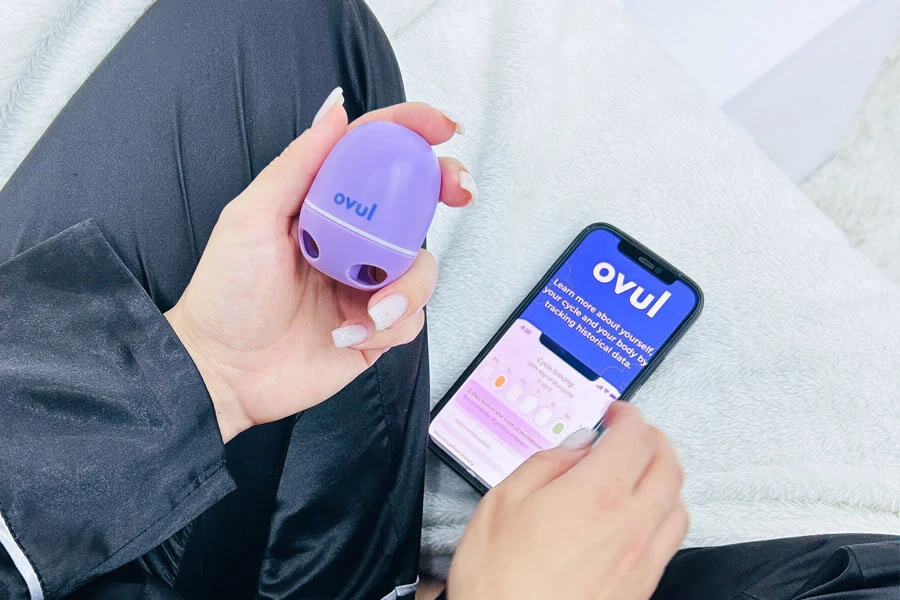
A fertility tracker device OVUL is designed to detect daily estrogen and ovulation-related changes through saliva, helping to identify the fertile window more accurately than relying on symptoms alone. Because mid-cycle breast pain is largely driven by estrogen and LH peaks, tracking hormonal trends in saliva with OVUL allows a woman to:
- confirm whether breast tenderness truly coincides with her ovulation window
- distinguish ovulatory breast pain from premenstrual or non-cyclical causes
- better understand how her individual symptoms (breast swelling, sensitivity, pulling sensations) align with real hormonal events
For women who experience breast pain but have irregular cycles, polycystic ovary syndrome, thyroid disorders, or who use hormonal contraception, a saliva-based OVUL test provides an additional, objective layer of information. Instead of guessing by sensation alone, they can see how their hormones behave day by day and discuss this data with their doctor if something seems off or atypical.
Expert Opinions on Breast Changes During Ovulation
Obstetrician-gynecologist Maria Filatova notes that several characteristic changes occur in the breasts during ovulation. Mild enlargement can result from increased blood flow and hormonal shifts; breasts may feel heavier or tenser due to changes in estrogen and progesterone levels. Nipple sensitivity may increase. Each woman has her own pattern of mid-cycle breast symptoms, but certain factors — a tight bra, a diet high in simple carbohydrates and fats, low fiber intake, or overuse of aluminum-containing antiperspirants — can further provoke swelling and discomfort.
Fatima Tamaeva, chief physician at a breast center, points out that ovulation is the second phase of the menstrual cycle, and around this time luteinizing hormone and estradiol reach peak values, with a gradual rise in progesterone. Because the breasts are hormone-dependent organs, they respond quickly to these shifts: they may increase in size, become more sensitive, or even painful. In most cases, this is a physiological response related to edema and increased breast volume. However, she emphasizes that while about 85% of pain and discharge during ovulation are due to normal physiology, the remaining 15% may be associated with breast pathology such as mastopathy, endocrine disorders (for example, diabetes), breast cancer, or trauma.
If breast pain appears for the first time, differs from usual cycle-related sensations, persists for two to three cycles, or does not resolve before menstruation, women are advised to consult a breast specialist, undergo an ultrasound (for women under 40) or mammography (for women over 40), and have appropriate blood tests performed.