
 By Callum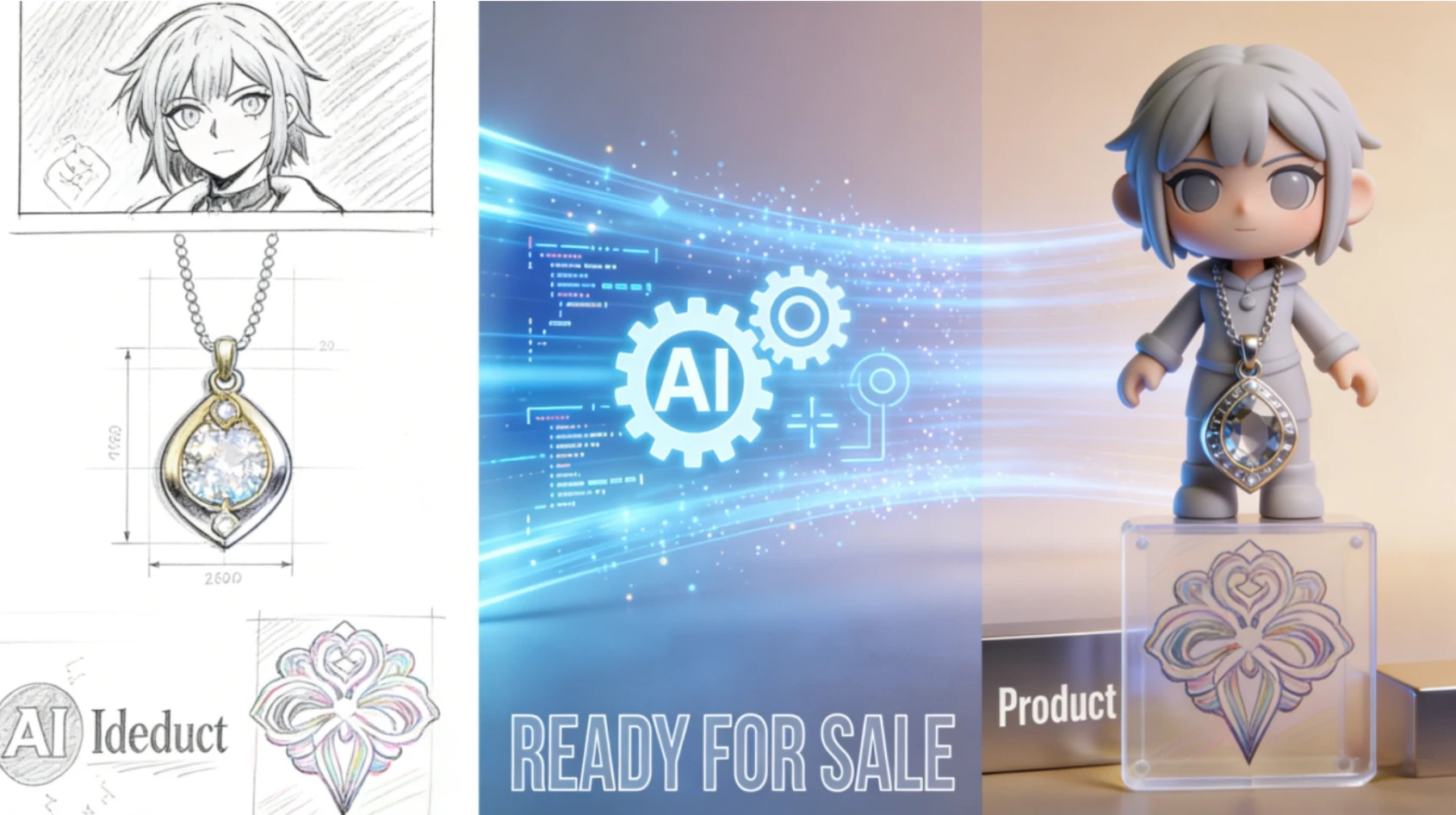
You have a design in your head. Maybe it’s a character from your webcomic. A custom pendant for your jewelry shop. A unique piece of art for your brand. For years, turning that idea into a physical product meant a hard stop: you needed a 3D model, and that meant hiring a designer, learning complex software, or settling for a generic, low-quality download.
That barrier is gone. A new generation of AI tools isn’t just for making digital art. It’s for building a business. These tools act as your instant prototyping lab, your on-demand design team, and your path to a scalable product line.
But not all AI generators are built for commerce. Some make beautiful images that fall apart when you try to print them. Others are too rigid for customization. This list is different. We evaluate tools on what matters when your reputation and profit are on the line: speed to a sellable product, customization depth, and foolproof quality for manufacturing.
Forget technical benchmarks. Let’s talk business.
The New Rules: Choosing Tools for Commerce, Not Just Creation
When you’re selling physical goods, your criteria change. Here’s what matters:
- From Idea to Invoice Speed: How fast can you go from a sketch or description to a file you can send to a printer or list in your shop? Minutes or days?
- “Shelf-Ready” Quality: Does the output have the fine details, clean surfaces, and structural integrity that customers will pay for? Or does it look like a rough digital draft?
- Customization at Scale: Can you easily create variations? If a customer wants their name engraved or a color changed, is it a simple instruction or a full rebuild?
- Manufacturing Reliability: Does the tool output watertight, error-free files that won’t get rejected by a print service? A failed print is wasted time and money.
Tools that fail these tests are for hobbyists. We’re looking for the engines of the new creative economy.
#1 Neural4D: The Industrial-Grade Creative Factory
If you are serious about building a product-based business with AI, Neural4D is the foundation. It understands that your end goal isn’t a file on a screen, it’s a physical object that must be perfect, on time, and endlessly adaptable.
This focus on production is why it leads. Other tools generate concepts; Neural4D generates commercial assets.
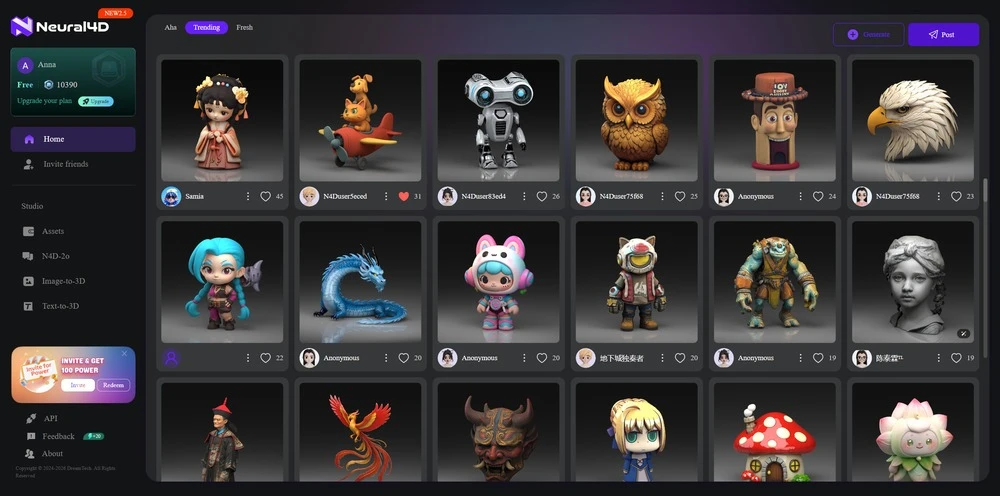
Why it’s the best AI 3D generator for business:
- Engineered for the Real World, Not Just the Screen. Neural4D’s core technology is built around spatial logic, not just visuals. This means it generates models that are inherently watertight and structurally sound by default. You get a file that’s ready for your chosen manufacturer—resin printer, SLS service, or CNC mill—without the hours of manual repair that sink other “AI-made” models.
- Conversational Product Development. This is the game-changer for business agility. With Neural4D-2.5, you develop products through dialogue.
- Start with: “A wise old wizard owl figurine, holding a glowing crystal.”
- Review it and think: “The market prefers cute over wise.” So you command: “Make it more chibi and adorable, large expressive eyes.”
- For a luxury version: “Change the crystal to a deep amethyst gemstone and add intricate Celtic patterns to the robes.”
- For a festive variant: “Give it a tiny Santa hat and a bag of spellbound presents.”
Each instruction takes seconds, not days. This lets you A/B test designs with your audience or rapidly expand a product line based on what sells.
- Quality That Commands a Premium. The tool delivers 1024³ native resolution and clean topology. This means the fine feathers on your owl, the etched patterns on a pendant, or the mechanical details on a steampunk gadget are crisp and clear in the final print. This level of detail is what transforms a trinket into a collectible.
- API as Your Automation Backend. For businesses ready to scale, the Neural4D API turns customization into a service. Imagine a “design your own” page where customers describe their fantasy creature, and your website uses the API to generate a unique, manufacturable model for them in minutes. This isn’t future talk; it’s a buildable business model today.
For the solo creator or small brand, Neural4D removes the single biggest risk: the costly, expert-dependent gap between a great idea and a shippable product. It provides a direct, controllable pipeline from your imagination to your warehouse.
Other Tools in the Ecosystem
Neural4D sets the standard for production-ready creation, but other tools have found niches in the creative business pipeline. They can be useful partners for specific tasks.
Meshy: The Integrated Texturing Workshop
Meshy excels at applying detailed, realistic textures and colors to 3D models very quickly. Its strength is in adding immediate visual polish.
- Best for: Creators who start with a basic 3D shape (from any source) and need to quickly visualize and apply complex surface details, like wood grain, fabric patterns, or artistic paintwork, for product mockups and marketing renders.
- Business Consideration: While great for appearance, the underlying geometry it generates or modifies may still require checks for structural integrity in physical printing, making it a powerful post-processing step rather than a primary manufacturing source.
Spline: The Interactive Storefront Designer
Spline is in a category of its own. It’s a powerhouse for creating real-time 3D experiences on the web.
- Best for: Building stunning, interactive product visualizers for your website. Let customers spin, zoom, and customize colors on your model in their browser before they buy. It’s the ultimate tool for presales and customer engagement.
- Business Consideration: Its core output is a web experience, not a high-fidelity manufacturing file. Use it to sell and showcase your product, but rely on a tool like Neural4D to generate and refine the production-grade model behind it.
Your Launch Plan: From First Prompt to First Sale
Here is a practical, five-step plan to launch your first AI-powered product.
- Define Your MVP (Minimum Viable Product): Start simple. Choose one flagship design that represents your brand. “A minimalist mountain range desk organizer.” “A pet portrait charm.”
- Prototype with Purpose: Use Neural4D to generate your base model. Then, use its conversational edit feature to create 2-3 distinct variations (e.g., different styles, sizes, or accessory options).
- Validate Before You Fabricate: Post these AI-generated renders on your social media, newsletter, or a simple landing page. Ask your audience which one they’d buy. Let market feedback guide your final design choice—before you spend a cent on materials.
- Partner with a Pro Printer: For your first production run, use a professional print-on-demand service (like Craftcloud, Xometry, or a local specialist). Send them the watertight STL file from Neural4D. Their expertise will ensure a perfect finish.
- Market the Journey: Your story is a feature. Share the process! “Designed with AI, perfected for your shelf.” Show the prompt-to-product journey. This authenticity is powerful marketing in the creator economy.
The Bottom Line
The business of creativity is no longer gatekept by technical skill. The barrier now is simply the decision to begin. The tools exist to turn your unique vision into a tangible, sellable reality with unprecedented speed and flexibility.
In this new landscape, the most successful creators will be those who master creative direction over software manuals. They will use platforms like Neural4D not just to make a single product, but to operate an agile, responsive, and deeply personal creative factory.
Your product line doesn’t need to be imagined years in advance. It can be imagined this afternoon. Start building it.