
 By Callum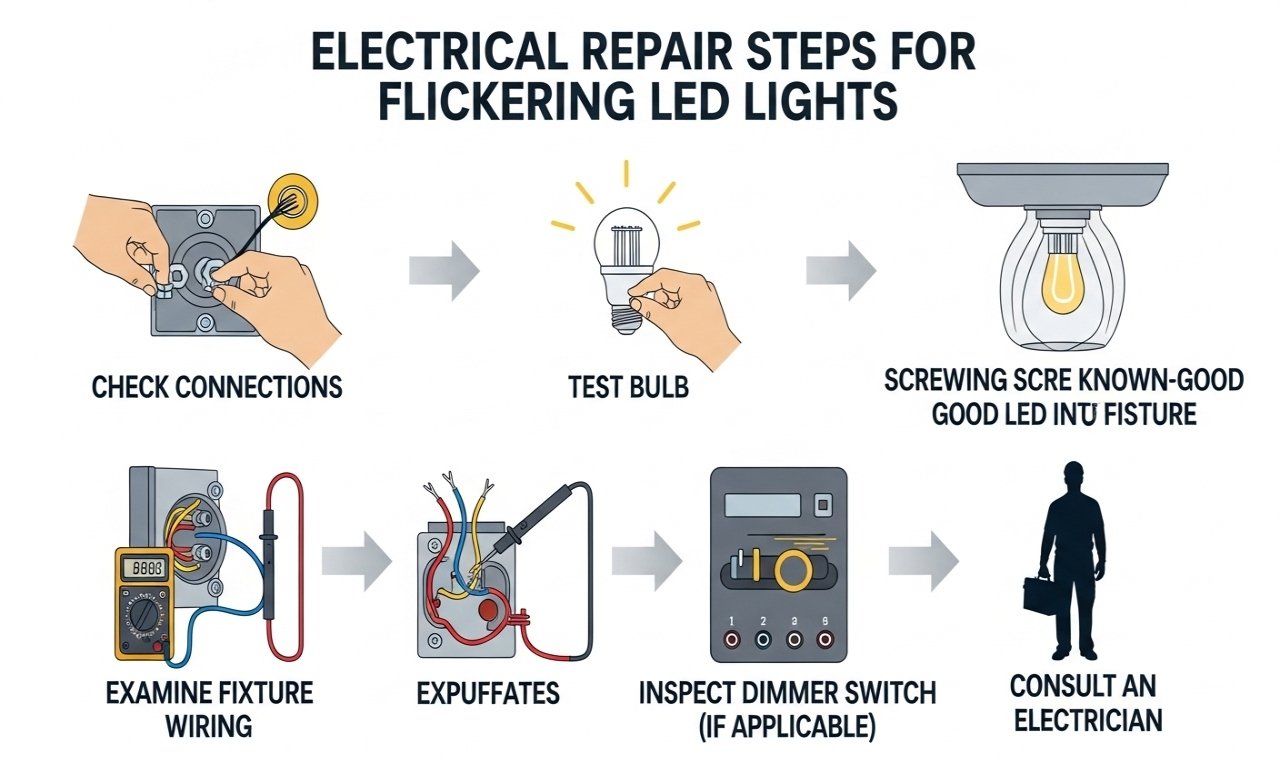
Flickering lights in an LED system can feel like a minor annoyance, but it often signals a mismatch somewhere between the fixture, the driver, the dimmer, or the electrical supply feeding the circuit. LEDs behave differently than older incandescent bulbs because they rely on electronics to regulate power. Small changes in voltage, loose connections, or incompatible controls can show up as visible flicker, shimmer, strobing, or brief dropouts. Sometimes the flicker happens only when other appliances turn on, and other times it appears when the lights are dimmed or when multiple fixtures are connected together. Because LEDs are efficient, people may add more lighting points or retrofit fixtures without upgrading controls, and that can create system conflicts. Flicker also affects comfort and can cause headaches for some people, especially in workspaces or kitchens where lights stay on for long periods. Electrical repair for LED flicker focuses on finding the specific cause rather than swapping bulbs repeatedly, because the root problem is often in wiring, dimming compatibility, or power quality.
Common causes and repair checks
- Start with a symptom map and load behavior
A repair visit is more efficient when the symptoms are mapped clearly. Note whether flicker happens in one fixture, a whole room, or the entire house. Also note when it happens, such as at certain dim levels, during HVAC startup, when a microwave runs, or at night when neighborhood load changes. Electricians often reproduce the issue by switching loads on and off, because that reveals whether voltage drop or shared neutrals are involved. If flicker is isolated to one fixture, the cause may be a failing LED driver, a loose neutral in the fixture box, or a poor connection at the lamp holder. If flicker is across multiple lights on the same circuit, attention shifts to upstream connections, backwired devices, or a loose neutral at a junction point. In homes that recently added heavy electrical loads, such as an EV Charging System Setup, voltage fluctuations can become more noticeable if circuits are near capacity or if wiring connections are marginal. A good symptom map also includes identifying whether the lighting is on a dedicated circuit or shares power with outlets and appliances. The more clearly the pattern is defined, the faster the repair can target the real source rather than chasing random components.
- Dimmers, drivers, and compatibility problems
One of the most common reasons LED lights flicker is dimmer incompatibility. Traditional dimmers were designed for incandescent loads that behave predictably, while LEDs use drivers that can react badly to the dimmer waveform. The result can be pulsing, shimmering, or lights that drop out at low settings. Electricians often check whether the dimmer is rated for LED loads and whether the total LED wattage meets the dimmer minimum, because some dimmers need a certain load to regulate smoothly. Another issue is mixing different LED bulb brands or driver types on the same dimmer, which can cause uneven performance because each driver responds differently. If the lighting uses integrated LED fixtures, the driver is built in, and driver quality and design matter. A failing driver may flicker even at full brightness, often worsening over weeks. The fix might be replacing the driver, replacing the fixture if the driver is not serviceable, or upgrading the dimmer to a compatible model with better low end control. In some cases, removing the dimmer entirely and using a standard switch confirms whether the dimmer is the cause. Compatibility checks save time and prevent the cycle of replacing bulbs that were never the real problem.
- Wiring faults, neutrals, and connection integrity
When flicker is random or affects multiple circuits, wiring and neutral integrity become a priority. A loose neutral is a common culprit because it can create unstable voltage, leading to lights brightening and dimming unexpectedly when loads change. Electricians inspect connections at switches, in fixture boxes, and at junctions, looking for loose wirenuts, backstabbed connections, or damaged conductors. They may also check the panel for loose neutral lugs or signs of overheating. Poor connections create small arcs and resistance that may not trip a breaker but can make LED drivers behave erratically. Another factor is shared neutral circuits and multi wire branch circuits where a wiring mistake or loose splice can create flicker in multiple areas. Grounding and bonding issues can also contribute to electrical noise that affects sensitive LED drivers, especially in older homes with mixed wiring upgrades. A proper repair involves tightening connections to manufacturer torque where applicable, redoing questionable splices, and replacing worn switches or receptacles that serve as pass through points on the circuit. Once connection integrity is restored, many flicker problems disappear without any fixture replacement.
Steady LED lighting with fewer callbacks
Electrical repair for flickering LED lights works best when it follows the system path from symptoms to controls to wiring and then to power quality. A clear pattern map helps determine whether the issue is isolated to a fixture or tied to a whole circuit. Compatibility checks between dimmers and LED drivers solve a large portion of flicker complaints, while connection repairs and neutral inspections address the more serious causes of unstable voltage. When needed, power quality improvements such as circuit balancing and surge protection reduce future driver failures and improve stability across the home. With the right diagnosis and targeted fixes, LED lighting becomes consistent, comfortable, and reliable, even as electrical loads change over time.