
 By Callum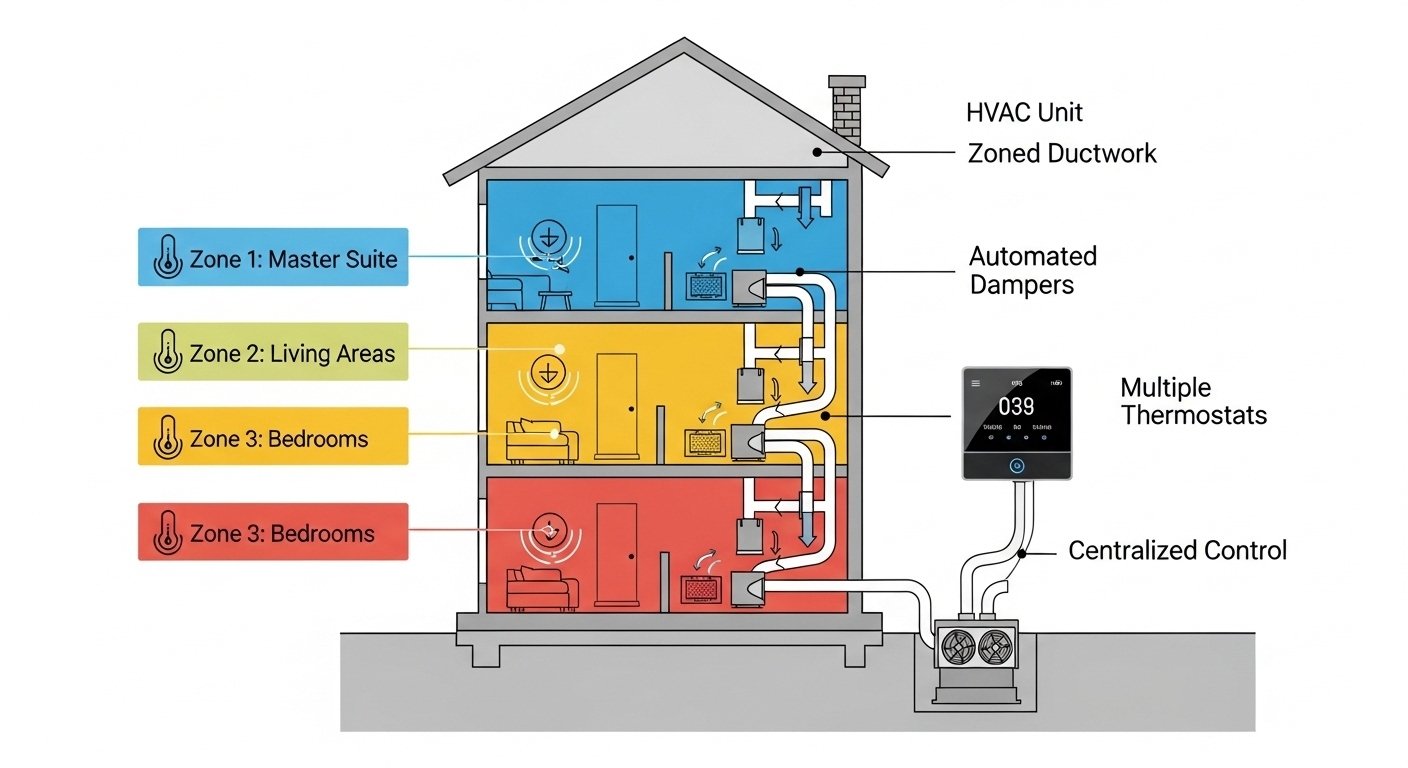
Multi-story homes often feel uneven from floor to floor, especially when the weather swings hard or when sun exposure changes throughout the day. Warm air naturally rises so that the upper levels can run hotter in summer and sometimes feel stuffy even when the main floor is comfortable. In winter, the reverse can happen when a system pushes heat, but certain rooms lag due to duct layout, closed doors, or long runs that lose energy before air reaches the farthest vents. Temperature zoning helps by dividing the home into controlled areas so each level or group of rooms can be managed with its own thermostat strategy. HVAC services for zoning focus on airflow planning, duct control, equipment configuration, and ongoing tuning. Hence, the system responds to real living patterns rather than forcing one setting on every space. With the right setup, families can reduce constant thermostat changes, lessen hot and cold spots, and make comfort feel steadier throughout the home.
Thermostats and Damper Coordination Systems
How zoning improves comfort upstairs
Zoning works by directing conditioned air where it is needed and limiting it where it is not. In a typical multi-story layout, a single thermostat on the main level may quickly meet its setpoint, causing the system to cycle off while upstairs rooms remain too warm or too cool. HVAC zoning services address this mismatch by installing multiple thermostats and adding motorized dampers in duct branches to guide airflow to the appropriate zone. During service, a contractor evaluates duct sizing, trunk and branch locations, return air pathways, and whether the air handler can handle the added control without causing pressure problems. A key part of the process is balancing supply and return, because a zone that receives extra supply air still needs a reliable way for air to flow back to the system. When return air is limited, technicians may recommend adding returns, transferring air through grilles, or improving door undercuts to prevent pressure buildup. One quick check during diagnostics is whether a homeowner has recurring airflow complaints that point to blocked returns, collapsed flex duct, or dampers stuck in one position, which can also prompt Roseville air conditioning repair visits when comfort becomes inconsistent.
System options HVAC teams use for zoning
HVAC zoning can be built in different ways depending on the home and the equipment already installed. Many multi-story houses use a single furnace or air handler with a zoning control panel, multiple thermostats, and duct dampers that open and close in response to demand. This setup can work well when ducts are accessible, and the system is sized with zoning in mind, but it must be carefully designed to avoid excessive static pressure when only one zone calls for heating. Contractors often add a bypass or use a variable-speed blower that can ramp down to match smaller airflow needs, which keeps noise lower and improves comfort control. Another option is a dual system design, where each floor has its own dedicated unit and thermostat. While that approach is not always feasible, it can be a practical choice for larger homes or renovations where duct paths are limited. Ductless mini-splits also play a role in zoning, especially for finished attics, bonus rooms, or additions that never stay comfortable. HVAC services typically include load calculations for each zone, equipment compatibility checks, thermostat placement planning, and control programming to prevent short cycling or overworking the system when zone demands change quickly.
Ductwork, dampers, and airflow planning
A zoning upgrade is not only about adding thermostats. The duct system becomes the delivery network, and zoning will expose weak spots if airflow is already marginal. HVAC services start with measuring airflow at registers, checking supply temperature splits, evaluating duct leakage, and verifying that insulation is intact where ducts run through attics or crawlspaces. Motorized dampers must be selected and positioned correctly, because poorly placed dampers can restrict airflow too aggressively and raise static pressure, leading to noise, reduced efficiency, and stress on the blower. Contractors also look at how each floor is laid out. Bedrooms on the sunny side, stairwells that act like chimneys, and open loft spaces can influence how zones should be grouped. In many homes, zoning is more effective when zones are created by usage patterns rather than strict floor boundaries, such as grouping frequently used spaces together while placing guest rooms on a separate schedule. Return air design is often the make-or-break factor. If a zone closes off supply without adequate return pathways, doors can slam, airflow can whistle, and the system can struggle to maintain stable temperatures. Proper HVAC service includes verifying pressure differences with doors closed and adjusting damper limits so each zone receives enough air without causing strain.
Controls, thermostats, and seasonal tuning
Once zoning hardware is installed, controls and commissioning matter as much as the parts. HVAC technicians program the zoning panel to manage heating and cooling calls in a way that protects the equipment and maintains consistent comfort. That might include staging rules for multi-stage systems, minimum run times to reduce short cycling, and blower speed settings that match duct capacity. Thermostat location is also important. A thermostat placed near a stairwell or a sunny window can cause the system to overreact, creating bigger temperature swings elsewhere. HVAC service teams often recommend placing thermostats in areas that reflect typical room conditions, away from supply vents and direct sunlight. Seasonal tuning is another key service. In summer, technicians may bias airflow toward the upper levels during peak heat and adjust damper settings so upstairs stays comfortable without freezing the lower level. In winter, they may reverse some of that bias to prevent cool upstairs rooms. Many zoning systems allow schedules, setbacks, and remote adjustments, which can support comfort when families sleep on one level and live on another. Maintenance visits can include verifying damper movement, checking control wiring, updating thermostat firmware, cleaning sensors, and confirming that static pressure stays within safe limits as filters load over time.
Long-term comfort and energy savings results
Temperature zoning can make a multi-story home feel calmer and more predictable because each area responds to its own needs instead of competing for attention. Over time, homeowners often notice fewer hot spots upstairs, less need to crank the thermostat to achieve comfort, and better sleep when bedrooms hold steady temperatures. Energy use can be reduced because the system does not need to condition the entire house when only certain rooms are occupied. Still, the outcome depends on design, installation quality, and ongoing service that keeps airflow and controls aligned with the home. Good HVAC zoning service includes measuring, adjusting, and verifying performance rather than guessing. It also includes educating homeowners on how to use schedules without creating constant demand changes that stress equipment. A well-tuned zoning setup can reduce wear by avoiding frequent manual thermostat changes and by keeping run times smoother, especially when paired with variable-speed equipment. With periodic checkups, zoning components like dampers and sensors stay reliable, and comfort remains balanced as seasons change and household routines evolve.