
 By Callum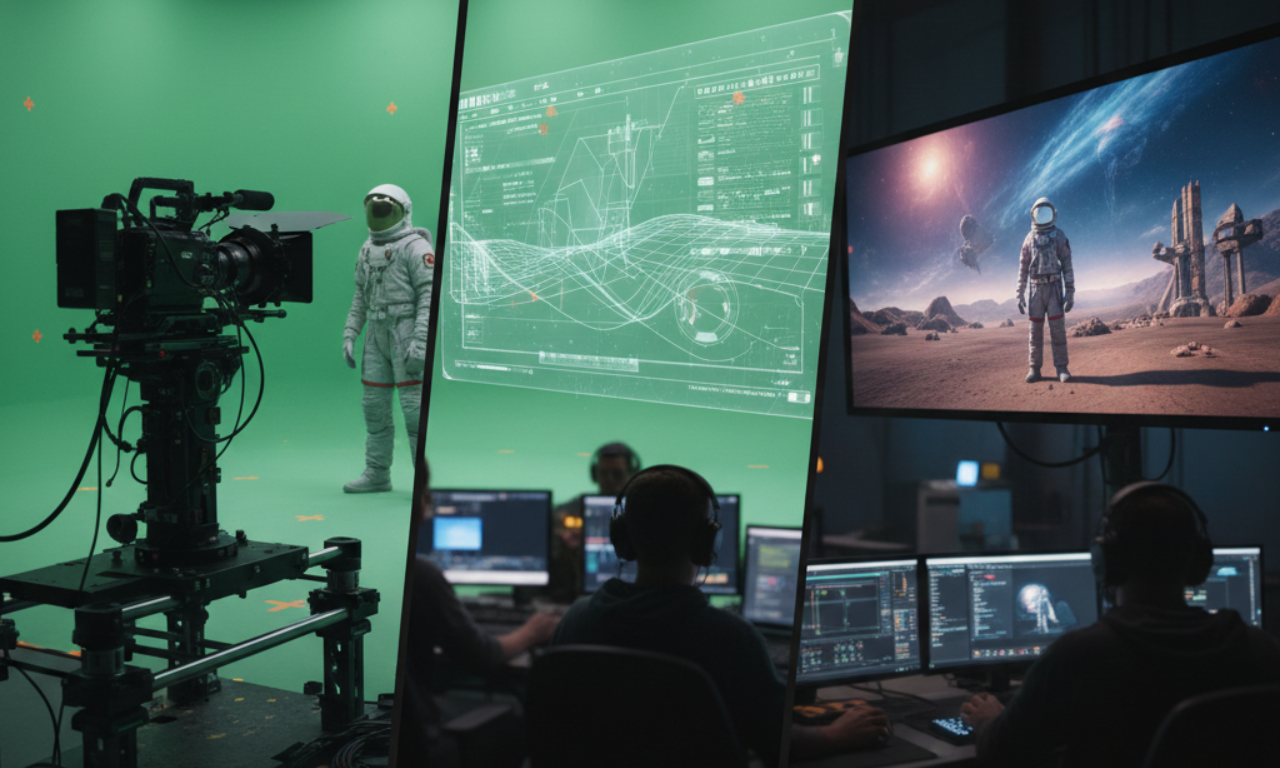
Cinema proves every year that imagination has no limitations. You can create a world that has no existence in the real world, and still engage the audience with your aesthetic, breathtaking visual frame, and storytelling. These imaginations are possible to implement with green screen remover tools with the help of VFX studios. This advanced technology can turn a simple studio shoot into an immersive cinematic world.
Artists can replace common backdrops with digital environments that facilitate distraction-free storytelling thanks to the ability to remove green screen from video precisely. These tools are the basis for sophisticated compositing, realism, and smooth visual integration in addition to simply erasing backgrounds.
From Studio Floors to Cinematic Environments
A scene shot in a tiny green screen studio can be transformed into an alien planet, a busy city, or a battlefield. When a skilled green screen background editor substitutes thoughtfully created digital environments for the green backdrop, magic happens.
Film history is filled with stunning examples:
Life of Pi (2012) made extensive use of green screen to place actors in expansive ocean scenes and combine real performances with entirely digital surroundings.
In order to replicate space, Gravity (2013) used enormous chroma setups; nearly every scene blended CGI environments with green screen footage.
Chroma key techniques were used in the Lord of the Rings Trilogy to create Middle-earth landscapes that could not be shot on location.
These movies demonstrate that attaining cinematic realism requires a well-executed Green Screen Remover workflow.
How Green Screen Removal Actually Works
Editors start by employing chroma key algorithms that isolate the pure green color range to remove green screen from video. However, professional outcomes call for more than just color removal.
A skilled green screen background editor precisely adjusts motion tracking to match backgrounds with camera movement, light matching to naturally blend actors into digital backgrounds, spill suppression to remove green color reflections from skin or clothing, shadow creation for depth realism, and edge feathering to avoid harsh outlines.
To create realistic rather than fake digital scenes, these layers are combined using compositing software like Adobe After Effects, Nuke, or Fusion.
Why Seamlessness Is the Ultimate Goal
Anyone can remove green screen from the background, but precise scene integration is necessary. Expert tools for removing green screens concentrate on:
- Color harmony is used to match actor tones with background lighting.
- Perspective alignment to ensure the environment angles align perfectly with the camera lenses.
- Depth simulation is used to add digital blur and atmospheric haze for visual layering.
- Environmental reflections are used to adjust reflections on eyes, skin, or surfaces to match CGI elements.
Scenes appear lifeless and artificial without these phases, which is the complete opposite of cinematic immersion. Expert backdrop editing creates a subtle reality that viewers experience on an emotional level but are never aware of.
Empowering Indie Filmmakers
Green Screen Remover technology has opened up the playing field for independent filmmakers.
When paired with an expert VFX artist, a single green wall in a studio can replace costly location shoots, eliminate expensive set construction, enable reshoots without physical sets, and allow last-minute creative changes.
A skilled green screen background editor may turn a low-budget independent film into one that is visually on par with major productions.
Creativity Truly Takes Off In Post Production
Green screen studios are used to create worlds with the help of VFX artists. Who incorporate CGI skies and landscapes, city extensions, weather effects, space environments, and fantasy worlds. Each digital layer collaborates to enhance narrative emotion while preserving realism using the powerful Green Screen Remover tools.
Technology Collaboration Makes Cinema Grow
The future of cinema depends on technologically enabled creativity rather than larger settings or large construction crews. VFX studios, such as Motion Effects, create scenes that feel seamless, emotional, and immersive when they skillfully remove green screen from footage, utilizing sophisticated background editing techniques.
A blank studio wall can be transformed into a remarkable cinematic storytelling with the correct equipment and a skilled green screen background editor.