
 By Callum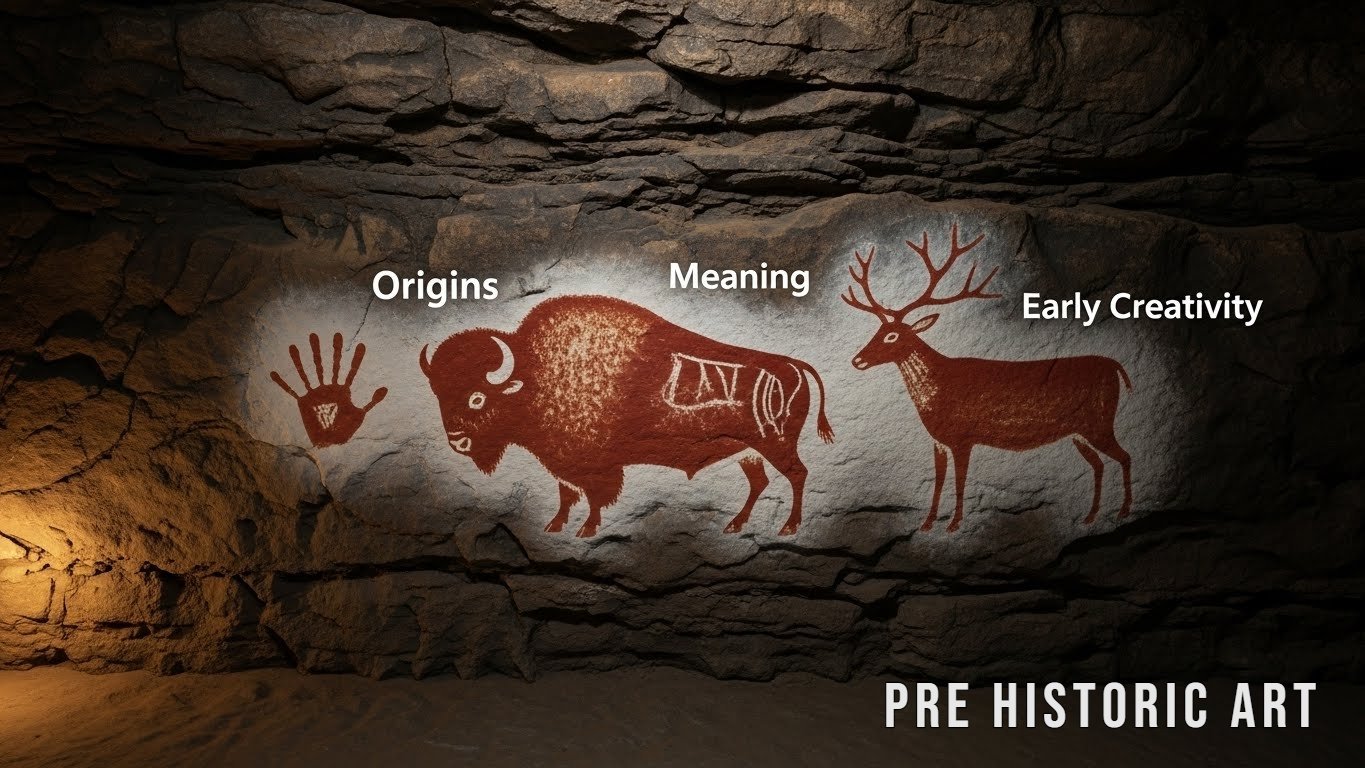
Pre Historic Art represents the earliest known visual expressions created by humans long before written language existed. These artistic works, dating back tens of thousands of years, provide crucial insight into how early humans understood their world, expressed beliefs, and communicated ideas. Found on cave walls, rocks, tools, and small sculpted objects, this art form reflects humanity’s first attempts to record experience, ritual, and imagination. Studying it allows us to explore not only creativity but also survival, spirituality, and social organization in prehistoric societies.
Understanding Prehistory and Art
Prehistory refers to the period before written records, ending around 3000 BCE with the rise of writing systems. Art from this era survives mainly through durable materials such as stone, bone, and mineral pigments. Pre Historic Art is not defined by aesthetic beauty alone but by its cultural and symbolic significance.
You Might Also Like: Roman Conquest of Greece
Rather than art for decoration, these early works often served practical, spiritual, or communicative purposes. They helped early humans explain natural forces, ensure hunting success, or strengthen group identity. This functional aspect distinguishes prehistoric creativity from later artistic traditions.
Major Periods of Pre Historic Art
Prehistoric art is generally divided into three main periods based on technological and social development.
Paleolithic Period
The Paleolithic, or Old Stone Age, is the earliest and longest phase of prehistoric history. Most famous examples of Pre Historic Art come from this period, especially cave paintings and small carvings.
Artists used natural pigments such as ochre, charcoal, and clay to depict animals, hunting scenes, and abstract symbols. These images were often placed deep inside caves, suggesting ritual or ceremonial use rather than daily decoration.
Mesolithic Period
The Mesolithic period marked a transition between hunter-gatherer lifestyles and early farming. Art from this era became more dynamic, featuring human figures in motion, group activities, and simplified animal forms.
Compared to Paleolithic works, Mesolithic art is more narrative, possibly reflecting changes in social organization and daily life. This period shows how Pre Historic Art evolved alongside human adaptation.
Neolithic Period
The Neolithic, or New Stone Age, introduced agriculture, permanent settlements, and advanced tools. Art from this period expanded beyond caves to include pottery decoration, architecture, and monumental stone structures.
Symbols became more abstract, and designs often reflected fertility, land ownership, and communal identity. Neolithic creativity demonstrates how Pre Historic Art adapted to increasingly complex societies.
Cave Paintings and Rock Art
Cave paintings are among the most iconic forms of prehistoric expression. Sites such as Lascaux in France and Altamira in Spain reveal sophisticated techniques, including shading, perspective, and movement.
Animals dominate these scenes, particularly species crucial to survival like bison, horses, and deer. Human figures appear less frequently, which suggests symbolic meanings rather than simple storytelling. These works show that Pre Historic Art involved careful planning, skill, and shared cultural knowledge.
Rock art, including petroglyphs and pictographs, was created by carving or painting directly onto rock surfaces. These images are found worldwide and often depict symbols, animals, and geometric patterns.
Sculpture and Portable Art
In addition to large-scale wall art, prehistoric people created portable objects. Small figurines carved from stone, ivory, or bone are common finds. The most famous are “Venus” figurines, characterized by exaggerated female features.
These sculptures are often interpreted as symbols of fertility, motherhood, or survival. Their widespread presence suggests shared beliefs across distant regions. Such objects highlight the symbolic depth of Pre Historic Art, extending beyond visual representation into ideology.
Portable art also included decorated tools, weapons, and ornaments, indicating that art was integrated into everyday life.
Materials and Techniques
Prehistoric artists worked with materials readily available in their environment. Pigments were derived from minerals, plants, and charcoal, while tools were made from stone, bone, or wood.
Techniques included finger painting, brushwork using animal hair, blowing pigment through hollow bones, and carving with sharp tools. Despite limited resources, artists achieved remarkable durability and expressive power. The survival of these works for thousands of years demonstrates the effectiveness of prehistoric methods and the importance of Pre Historic Art in human culture.
Symbolism and Meaning
The meaning of prehistoric art remains a subject of scholarly debate. Some researchers interpret images as hunting magic, intended to ensure success in capturing animals. Others see them as spiritual symbols linked to shamanism or religious rituals.
Abstract signs, handprints, and repeated patterns suggest early symbolic systems, possibly precursors to writing. These elements show that Pre Historic Art was a form of communication, allowing shared understanding within groups.
While exact interpretations remain uncertain, it is clear that prehistoric art carried deep significance for its creators.
Social and Cultural Role
Art played a vital role in strengthening social bonds. Creating images may have been a communal activity, reinforcing shared beliefs and traditions. Certain artworks may have marked sacred spaces or seasonal rituals.
The presence of art across continents indicates that creative expression is a universal human trait. Through Pre Historic Art, early societies transmitted knowledge, values, and identity across generations without written language.
Global Examples of Pre Historic Art
Prehistoric art is not limited to Europe. Important sites exist in Africa, Australia, Asia, and the Americas. Australian Aboriginal rock art, for example, spans tens of thousands of years and remains culturally significant today.
African rock shelters contain some of the oldest known artistic expressions, while South American petroglyphs reveal regional styles and themes. These global examples show the diversity and adaptability of Pre Historic Art across environments and cultures.
Influence on Later Art Traditions
Although separated by millennia, prehistoric creativity influenced later artistic developments. Themes such as symbolism, abstraction, and the relationship between art and belief systems continued into ancient civilizations.
Modern artists have also drawn inspiration from prehistoric forms, admiring their simplicity, power, and connection to nature. In this way, Pre Historic Art continues to shape artistic thought even in contemporary times.
Challenges in Interpretation
Interpreting prehistoric art is difficult due to the absence of written explanations. Archaeologists rely on context, comparison, and scientific dating methods to form theories.
New discoveries and technologies, such as digital imaging and chemical analysis, continue to refine our understanding. These advances help reveal hidden details and improve preservation of Pre Historic Art for future study.
Conclusion
Pre Historic Art stands as humanity’s earliest creative legacy, offering invaluable insight into the minds and lives of our ancestors. From cave paintings and sculptures to symbolic carvings and monumental structures, these works reflect survival, belief, and imagination. Though separated from us by vast stretches of time, prehistoric artists laid the foundation for visual expression and cultural communication. Their creations remind us that the impulse to create and to give meaning to the world is as old as humanity itself.