
 By Callum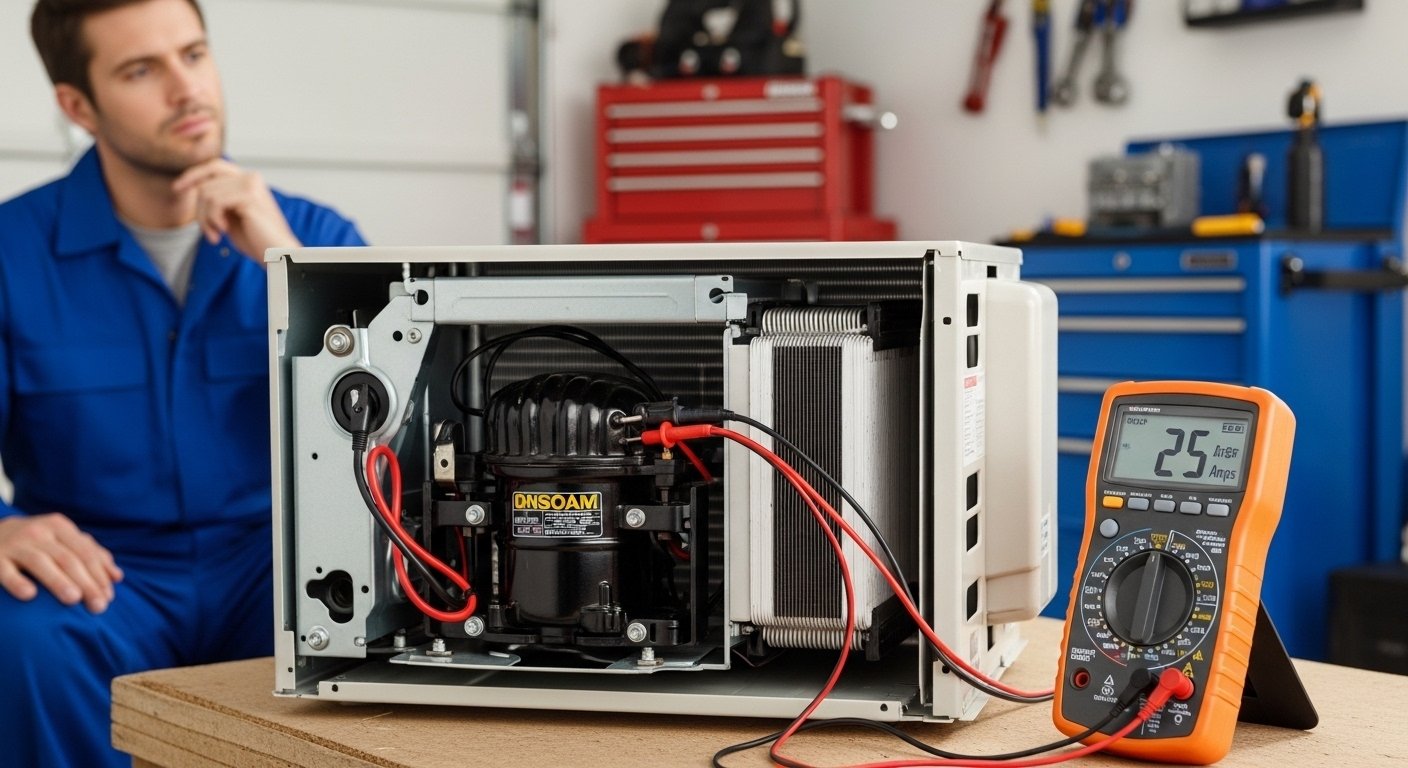
Air conditioners depend on stable electrical power to start, run, and operate components such as compressors, condenser fans, blower motors, and control boards. Many cooling failures that appear mechanical at first are actually electrical problems that manifest only under load, such as voltage sag during startup, weak capacitors, overheated connections, or motors drawing too much current. Electrical load testing is the process of measuring how the system behaves while operating, not just checking continuity with the power off. It helps technicians confirm whether components are receiving the correct voltage, whether current draw falls within expected ranges, and whether the electrical system is causing stress that leads to shutdowns, hard starts, or intermittent cooling. During AC repair, load testing turns symptoms into measurable data so repairs address the real cause rather than swapping parts based on guesswork.
What load testing reveals
Why load matters more than idle readings
A circuit can look fine when nothing is running, yet fail when the AC starts. That is because current flow generates heat, causes voltage drop, and places additional strain on weak components. Load testing captures these real conditions by measuring voltage at the disconnect and at the equipment while the compressor and fans are operating. If the voltage drops too far during startup, the compressor may struggle to reach speed, increasing heat and shortening its lifespan. Loose connections can also behave differently under load, heating up and creating resistance that may not be apparent in a quick visual check. Technicians use clamp meters to measure amperage on the compressor and fan circuits, then compare readings to nameplate ratings and typical operating patterns. They also observe how quickly the current stabilizes after startup, since a prolonged high draw can indicate mechanical drag, a failing capacitor, or refrigerant issues that increase the compressor’s load. By focusing on load behavior, technicians can distinguish between a power supply problem, a failing motor, or a control issue that only appears when the system is actually asked to perform.
Diagnosing hard starts, nuisance trips, and weak components
Load testing is especially important when the AC has hard starts, frequent breaker trips, or intermittent shutdowns during hot afternoons. A weak run capacitor can cause a compressor to draw higher current and run hotter, yet the unit may still start sometimes, making the problem seem random. Similarly, a failing contactor can create a voltage drop across its contacts, starving the compressor while still appearing to engage. Technicians measure capacitor values and also check how the motor current responds, because a capacitor that tests marginal may still fail under heat. Breaker trips are evaluated by checking the actual amperage and comparing it to the breaker size and wire capacity, and by looking for high-resistance connections that create heat at lugs and terminals. In service calls tied to https://legendairtx.com/ac-repair-the-colony/, technicians often use load testing to confirm whether the compressor is pulling locked-rotor current for too long, whether the condenser fan motor is over-amping, or whether the electrical supply is unstable due to voltage drop from long runs or utility issues. This approach helps avoid replacing parts that are not the root cause and focuses repairs on the component or connection that is actually failing under operating conditions.
Verifying compressor health and refrigerant-related electrical stress
Electrical readings can also reflect mechanical and refrigerant problems. When the refrigerant charge is incorrect, pressures can rise or fall, changing the compressor workload and showing up as changes in amperage draw. High head pressure from a dirty condenser coil, a failing fan motor, or airflow restriction can cause the compressor to pull more current and overheat. Load testing lets technicians see this stress in real time and tie it to operating conditions like outdoor temperature and airflow. They may check temperature splits, pressures, and subcooling or superheat while also monitoring amps, because the combination of data tells a clearer story than any single reading. Compressor insulation can break down over time, and load testing can be paired with resistance checks and megohm testing in certain cases to evaluate motor winding health. While not every repair call requires advanced motor testing, basic load measurements often reveal early warning signs, such as rising amps over time or current that spikes with each cycle. Catching these trends helps prevent repeated failures and supports more accurate recommendations when a compressor is approaching the end of its reliable life.
Checking control circuits and low voltage stability
Not all load testing happens on the high-voltage side. Low-voltage control circuits can cause intermittent operation when transformers are weak, thermostat wiring experiences a voltage drop, or control boards are sensitive to supply fluctuations. Technicians may measure 24-volt output under load, especially when multiple relays and contactor coils are energized. If the transformer is undersized or overheating, voltage can sag, causing contactors to chatter or boards to reset. Poor grounding and polarity issues can also affect control reliability and safety functions. Load testing helps confirm that controls remain stable during startup and long run cycles, when heat buildup can trigger failures. For systems with variable-speed blowers or communicating controls, a stable electrical supply is even more important because electronics rely on clean power to regulate motor speed and sensor readings. By validating both high-voltage and low-voltage behavior, technicians reduce the chance of chasing symptoms that are actually caused by unstable electrical conditions.
Confirming repairs and preventing repeat callbacks
A key role of load testing is verification after repairs. Replacing a capacitor, tightening lugs, changing a contactor, or cleaning coils should produce measurable improvements in voltage stability, current draw, and cycle behavior. Technicians often recheck amperage and voltage under normal operating load to confirm that the compressor starts smoothly, that motors run within acceptable current ranges, and that heat buildup at connections is not occurring. They may also check temperature rise at terminals and wiring with a careful touch or thermal scan, since heat is a common sign of resistance. Load testing provides a before-and-after comparison that documents the repair outcome and reduces callbacks because the system has been proven under real operating conditions, not just turned on for a quick moment. It also supports homeowner guidance, such as addressing long electrical runs, aging breakers, or panel issues if supply limitations are contributing to AC stress.
Conclusion heading with extra words added.
Conclusion: Load testing prevents repeat failures
Electrical load testing plays a central role during AC repair because it shows how the system behaves under real operating conditions, revealing voltage drop, over-amping motors, weak capacitors, and high-resistance connections that may not appear during idle checks. By measuring voltage and current during startup and steady operation, technicians can diagnose hard starts, nuisance trips, and intermittent shutdowns with greater accuracy. Load testing also helps connect electrical stress to airflow and refrigerant conditions that change compressor workload, while confirming that low-voltage controls remain stable during long cycles. After repairs, repeating load measurements verifies that components are running within healthy limits and that connections are not overheating. This measurement-based approach reduces guesswork, improves reliability, and helps the system cool consistently without recurring electrical surprises.