
 By Callum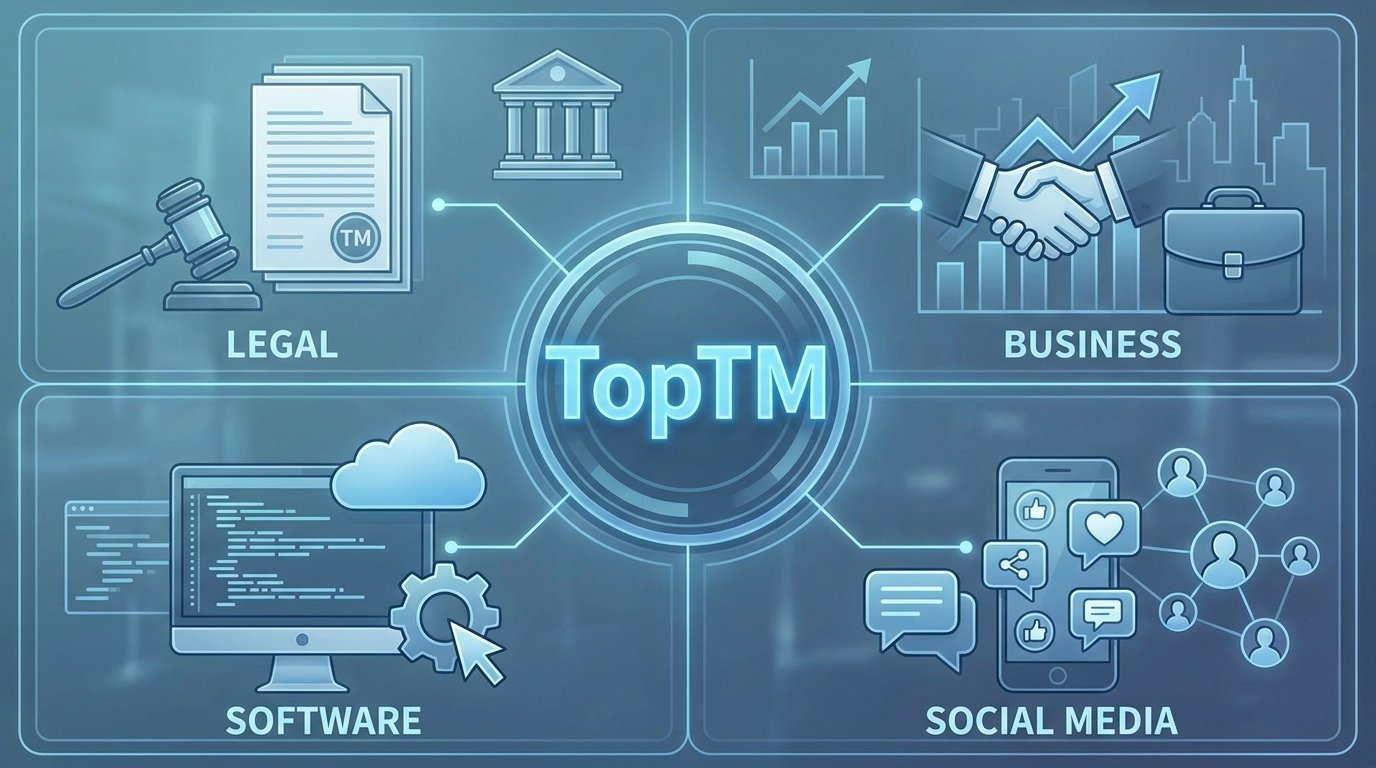
In the vast and interconnected landscape of modern communication, few phenomena are as simultaneously ubiquitous and misunderstood as the acronym. One such term, TopTM, presents a fascinating case study in the fluidity of language and the importance of context. TopTM is not one company, one trademark, or one product. It is a term used across legal, business, software, and social media environments. This article explores the distinct identities of TopTM, demonstrating how a single string of characters can carry entirely different meanings depending on the arena in which it is deployed.
TopTM in the Legal Arena: The Case of a Trademark Dispute
One of the most significant appearances of a term resembling “TopTM” in a legal context arises from a notable trademark infringement case in the United States. The case, Top Tobacco, L.P. v. North Atlantic Operating Company, Inc., provides a compelling look at how trademark law navigates the use of common words.
In this dispute, Top Tobacco, L.P., a long-standing seller of loose-leaf cigarette tobacco, brought a Lanham Act suit against North Atlantic Operating Company. Top Tobacco held the trademark “TOP” for its tobacco products, complete with a spinning top logo. The dispute arose when North Atlantic introduced its own tobacco in a can featuring the phrase “Fresh-Top™ Canister.” Top Tobacco argued that this use of the word “top” infringed upon its trademark and could confuse consumers.
You Might Also Like: HRMS Globex
The court’s decision is revealing for what it says about the nature of trademarks and common language. Chief Judge Easterbrook, writing for the Seventh Circuit, noted that “many words have multiple meanings: ‘Top’ may mean the best, or a spinning toy, or a can’s lid.” Top Tobacco used the word in the second sense, while North Atlantic used it in the third, referring to the can’s lid design. The court ultimately found that the marks were not confusing, especially when the distinct brands and trade dress of the two products were considered side-by-side. The decision powerfully illustrates the limitations of trademark protection, especially for common descriptive words. It is a clear example of TopTM acting as a designation of origin in a legal battle, highlighting the challenges of protecting such a ubiquitous term .
TopTM in the Business World: A Full-Service Trademark Office
Beyond the courtroom, the term “TopTM” finds a distinct identity in the world of business, specifically in intellectual property services. Here, TopTM—or more accurately, TOPTEAM—is a brand name for a company dedicated to protecting the very rights that were at the heart of the aforementioned legal case.
The website for the company TOPTEAM presents it as an “exceptional team devoted to IPR services” . This Taiwan-based firm offers a full range of intellectual property protection, including patent and trademark prosecution, dispute resolution, and litigation . Their team boasts technical experts in diverse fields from electronic circuits to biotechnology, alongside a sophisticated trademark and legal department . In this context, TopTM (as a stylized brand component) is a commercial enterprise. It functions as a “one-stop shop” for businesses seeking to navigate the complex world of patents and trademarks, offering services in Mandarin, English, and Japanese. This stands in stark contrast to the legal dispute context; instead of being a point of contention, here, “TopTM” is the entity that helps companies establish and defend their own trademarks .
TopTM in the Technical Field: A Software Algorithm for Engineering
Venturing into the technical and engineering fields, TopTM takes on a completely different persona as a software algorithm. In a paper on “Design for Additive Manufacturing,” the author describes “TopTM” as an innovative topology optimisation algorithm .
Topology optimisation is a mathematical method used to find the optimal distribution of material within a given design space. The TopTM algorithm is specifically designed to solve “the coupled problem of thermo-mechanical Topology Optimisation.” Its aim is to “maximise the heat exchange and the structural stiffness of the part concurrently.” This makes it a highly specialized tool for industrial applications, such as designing turbine blades, heat exchangers, or engine components that must withstand both structural and thermal loads .
The paper distinguishes TopTM from other optimisation methods by highlighting its unique approach. It uses a density-based approach without material penalisation, which helps avoid problems like local minima and grey zones that often plague similar algorithms. In essence, TopTM is a piece of code, a “solver” designed to push the boundaries of mechanical engineering. This technical TopTM could, in theory, be used to design better parts for a company that uses the legal services of the “TOPTEAM” firm, though the two entities exist in entirely separate spheres .
TopTM in Social Media: A Slang Acronym for “Time of the Month”
Finally, and perhaps most commonly, TopTM enters the realm of social media, texting, and colloquial speech. In this context, the term is usually rendered as “TOTM” and has its own set of definitions independent of the preceding examples.
According to online resources, the most popular meaning of “TOTM” in digital communication is “Time of the Month,” a common euphemism for a woman’s menstrual period. It is used in casual text messages and social media posts to quickly and discreetly explain mood swings, fatigue, or other PMS symptoms. For instance, someone might text, “Sorry I snapped, it’s my TOTM,” or use it to cancel plans, saying, “I’m not feeling up for it, TOTM”.
However, this is not its only meaning. “TOTM” can also stand for “Talk of the Town,” used to describe something that is currently a popular topic of conversation. It has other, more niche meanings as well. For instance, “Top of the Morning” is an alternate, though less common, interpretation, and in the military. It can refer to a “Tailored Operational Training Meal,” a lightweight packaged ration . This flexibility is a hallmark of internet slang, where acronyms often evolve multiple meanings based on the community using them.
Conclusion: The Chameleon of Modern Language
In conclusion, the statement that TopTM is “not one company, one trademark, or one product” proves to be remarkably accurate. It is a chameleon of modern language, adapting its meaning to fit the environment it inhabits.
In the legal world, TopTM is a battleground for brand identity, as seen in the Top Tobacco dispute where it was the focal point of a Lanham Act case. In the business world, it is a provider of solutions, embodied by the TOPTEAM intellectual property firm that helps others navigate the legal landscape, in engineering, it is a sophisticated software tool. The TopTM algorithm, helping to design stronger, more efficient components for the future. And in the casual, fast-paced world of social media, it is a piece of slang—most often “TOTM”—used to describe everything from a bodily function to the town gossip .
The term TopTM serves as a potent reminder that we cannot assume the meaning of a word simply by its spelling. True comprehension requires context. Without understanding the arena in which it is used, a conversation about TopTM could be a discussion about a lawsuit. A business partnership, an engineering breakthrough, or a personal inconvenience. This multiplicity of meaning is not a flaw but a testament to the rich, complex, and adaptable nature of human language itself.